Biblical Economics, Fundamentalist Christians,
and
Israel
by Daniel Gregg
 I have read
several papers recently by Christian scholars trying to give a biblical
foundation for economics. Also, I listened to a Christian scholar from
India lecture on the subject. Both of these sources equated capitalism
with a biblical form of economics while at the same time failing to deal with
monopolies and debt. Often conservatives tell us that low taxes are
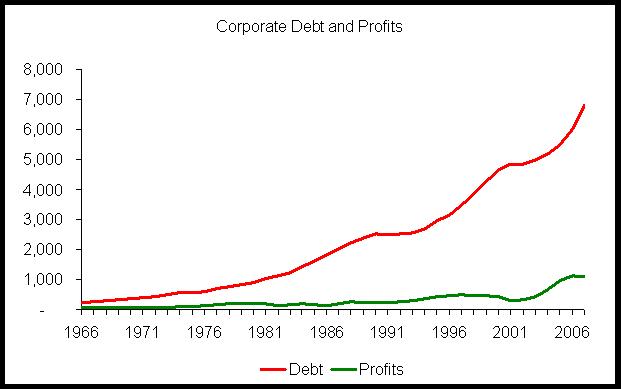
the solution to the problems of an economy, but fail to realize that both debt
and private monopolies drag an economy into depression as well as excess
government. The observation is made that small business are responsible
for most economic production and that low taxes encourage small business,
however it is almost never pointed out that the small business going up against
a monopoly advantaged by debt has as little chance of success as a business
trying to survive high taxes.
I have read
several papers recently by Christian scholars trying to give a biblical
foundation for economics. Also, I listened to a Christian scholar from
India lecture on the subject. Both of these sources equated capitalism
with a biblical form of economics while at the same time failing to deal with
monopolies and debt. Often conservatives tell us that low taxes are
the solution to the problems of an economy, but fail to realize that both debt
and private monopolies drag an economy into depression as well as excess
government. The observation is made that small business are responsible
for most economic production and that low taxes encourage small business,
however it is almost never pointed out that the small business going up against
a monopoly advantaged by debt has as little chance of success as a business
trying to survive high taxes.
Large corporate business' are able to lower
their prices for a period to drive smaller business out of the market.
They are able to lower the prices below what it even cost them to produce.
The smaller business cannot survive this manipulation of fair price in the
market. They have to shut their doors. As soon as
this happens, the large business raises its price higher than a fair market
price.

A large business does not
even have to consciously set out to manipulate its competition out of the
market. It only has to be large, and then nature takes its course. The large business is
more able to lower prices during a recession, even below market.
They think they are following the market price, but they are not.
Their ability to drop prices prevents needed production from entering the market.
For this reason, the Scripture imposes limits on the size of a business.
The limits on size may be indirectly derived from the land and debt laws, but
such laws are quite effective in preventing a business from growing to a obscene
size.
Conservative
Christian descriptions of economics omit nearly all discussion of the negative
effects of debt or the biblical responsibilities of creditors to cancel all debt
every seven years. This is partly because for some terribly
unbiblical reason Christians regard debt forgiveness or cancellation as if it
were a form of theft. It seems that Churches give creditors
theological smoke screen to hide behind by laying moral responsibility on the
debtor in perpetuity. This attitude is not the way God
designed the biblical economic system to work. In order to see this
we must examine both the biblical commands and the nature of debt and
monopolistic business.
The ability of a large business to borrow
large amounts of money is due to the fact that creditors know they don't have to
cancel the debt after seven years. Then large business gains the
advantage to grow at an unusually fast rate, shortening the time required to
become monopolistic. Because business is based on competition, the
monopolistic tendency of a business increases with the size of the business.
The ability to borrow money when combined with competition that can "add house
to house" and grow without limits is a recipe for economic disaster.
Such growth is exponentially proportional to the creation of debt.
Business are able to add house to
house because the world does not follow the land principles of the Bible.
The Jubilee law requires land to be restored to individual families after fifty
years. This severally limits a mega corporation from gaining large
amounts of land.
As business' grow into corporations owning chains of stores or factories, they
automatically tend to become more worldly and unethical. Large
business get large because they are only interested in profits and not in
ethics. The large business therefore will make an ethical compromise
if it means more profits. For instance the corporations have
discovered that their profits increase if they appeal to the flesh through
advertising. Those businesses that appeal to the flesh better get
more business and more profits. If the monopolistic corporation was
not in place, a range of smaller businesses, more closely tied to a moral
society, will resist the appeal to the flesh. Moral people will
patronize moral business if they are not put out of business by the unethical
corporation.
For example, we would like not to
patronize the Wal-Mart Mega Corporation. Why? Wall Mart buys cheap
Chinese products. They are only cheap because the Chinese are
willing to work as slave labor. Wal-Mart supports homosexuals and
abortionists because they see that the political wind is blowing this way.
Wal-Mart is at the forefront of new world order snooping and surveillance.
Did you ever notice all the cameras? Wal-Mart became a large business because it was able to borrow the people's
money to expand. It also put millions of small business out of
business and millions of people out of better jobs. Wal-Mart due to
its monopoly in the market is able to pay its workers unusually low wages.
Wal-Mart was able to become large because it was able to acquire more than its
fair share of property, because there are no biblical land laws.
The larger a business is, the more
willing it is to compromise with the world and unethical business practices.
Compromise outside of biblical law leads to success in the worldly market place.
Perpetual debt, monopoly, and sin will conspire together to put all property and
business under the control of one world master, that with the use of computers,
will enslave the entire world. Failure to apply biblical law
leads naturally and automatically to this conclusion in a sinful world.
Where will the free exception be? It will be in that country or land that
keeps itself separate and follows moral biblical laws of economics.
A Sefer Torah Scroll

The conservative Christian ideal of
economics involves competition and private ownership of property hopefully
combined with moral business ethics. However, these ideas fall far
short of the biblical model of a sound economic system because they neglect the
biblical environment in which these ideas thrive. In fact,
they are so deficient that they will not prevent the economic crashes and
depressions caused by other systems of economics. Capitalism as
conceived by the Christian conservative in America will lead to the same result
as Socialism. The defect in the fundamentalist Christian model of
economics is due to the failure of the Christian fundamentalist to embrace
Biblical Law or failure to understand the sound reasons for Biblical Laws.
One only has to listen
to Rush Limbaugh or Sean Hannity exposit on free market economics, the need for
deregulation, and government hands off, to get a feel of the deficiency once we
understand what is missing. Any further controls on the market
place are regarded as government intrusions, or socialism, or communism.
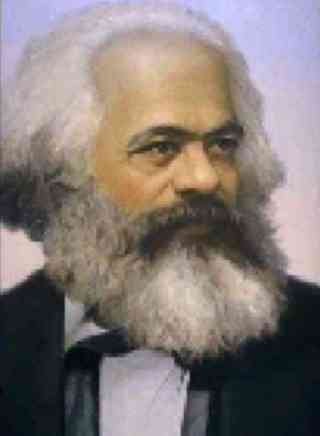
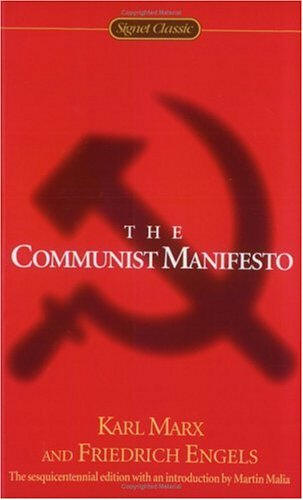
We all despise Karl Marx and the
Communist Manifesto, and yet many of our nation's policies are communist, like
progressive education by the state, a direct income tax, etc, and the
nationalization of basic industries. However, Karl Marx was right about
the basic nature of unregulated Capitalism. Competition leads to a
predictable and provable result. Some people compete better than
others because they are either smarter or they put a higher value on competing
with others. A person who works 24/7 will always out compete someone
who places a higher value on religious pursuits, or family time. One
need only look to Japan or China to find a culture with an absurd work ethic. A
person can always out compete someone
 else by lowering their quality of life in
un-economic pursuits or by cutting ethical corners. With no laws to
restrain such behavior, they will succeed. Those who compete
better tend to add house to house. They grow into large corporations
that become monopolistic. China captured America's industrial output
by the use of the free market. When we should have restrained their
growth with tariffs, we let them put smaller American business out of business,
but we sent our business overseas with the predictable result that China now
does all the work while Americans are lazy.
else by lowering their quality of life in
un-economic pursuits or by cutting ethical corners. With no laws to
restrain such behavior, they will succeed. Those who compete
better tend to add house to house. They grow into large corporations
that become monopolistic. China captured America's industrial output
by the use of the free market. When we should have restrained their
growth with tariffs, we let them put smaller American business out of business,
but we sent our business overseas with the predictable result that China now
does all the work while Americans are lazy.
To get the picture of Capitalism we must
take into account the ability of those competing the hardest, and in the most
unethical manner, to borrow the most money. The borrowing of money
allows the competition to grow their monopoly at an unnatural rate and to an
unnatural size. Borrowing money allows the corporation to expand and
add house to house using the resources of others. When the
corporation reaches a certain size and obtains a large degree of power, then
those who lent the money can no longer compete with it in the market place in
order to make a reasonable profit.
Unregulated capitalism in America
was combined with fiat currency in 1971 when the United States went off the gold
standard. This took the limits off how much credit (borrowing) could
be created by the banks. It also took off the limits of how much the
American Central Bank could exploit the rest of the world. But let us get
back to the root causes: monopolies and debt. Monopolies and debt,
and taxes are always the villains that kill off any economy. A
point arrives in every economy based on monopoly and debt, when the monopoly,
due to its superior profit making ability, is able to shift the debt off onto
the people who do not own the monopoly.
This is exactly what
happened in America. The debt has been shifted to the people of America
and to other nations of the world. Those big business with the most
political power, i.e. giving politicians campaign contributions, also control
the way laws are written. They wrote the bailout laws to favor banks
and U.S. corporations that deserve to fail. They also engineered laws so
that debt could be shifted to other nations. While they have their
own debts paid off, the average American is left with an unbearable debt burden.
It is time to kick the
oligarchs out. It is time for a revolution before they and their
greed starve America with debt to death. Hopefully it is not a shooting
revolution. Hopefully, states, counties, and cities should realize that
the solution is to cancel debt, reduce taxes, and break monopolies.
It is a slim hope however, because it will not happen without a spiritual
reformation and a turn to biblical economics.
Eventually there comes a point
when the people of a land's ability to compete against the monopoly is so
reduced that they can no longer service the debt that they have been forced to
take on. They begin to default on the debt. This in turn
decreases the profits of the monopolies, and the weaker monopolies begin to fire
people in order to survive the inability of the people they impoverished to
support their profits. The more people that lose their jobs
the more debts go bad and so on. An self feeding cycle
kicks in and the whole debt system comes crashing down.
Why Christian
Fundamentalists cannot understand how competition and lack of regulation of
monopolies and lending leads to exactly the result we are seeing today is hard
to fathom. Pure historical observation of fiat currencies, lending, and
monopolies should be sufficient to demonstrate the case. And of all
people, Christians ought to understand the divinely ordained biblical solutions
to these two problems:
-
All debts must be utterly and totally forgiven every seven
years (Deut. 15:1-2). This will prevent skillful competition from conquering all the
resources by borrowing money. It will limit the expansion rate of any
would be monopolies. It will also restore the moral balance
between the borrower and the lender. Lenders must be made
responsible. If a loan is not profitable in less than seven years, it
should not be made.
-
Real private property must be owned without paying rents or
any taxes on it to the government. Property is not really private when
you have to pay the government for living on the land. Government does
not need to tax land! It can collect money for all legitimate
governmental needs by charging for services that it provides.
And any debt incurred for the use of such services also has to be forgiven
in the seventh year, and it can never be allowed to encumber the land.
Biblical land rights were so private that not even a king could legally take
it (1 Kings 21:1-19).
-
Private property must be distributed equally among the people
of the land (Joshua 14:1-2; Ezek. 47:23). It may not be sold, but only rented for up to 50 years,
when the lease must end, and the property returns to the family allotted to
that property (Lev. 24:8-10). This will prevent any monopoly from growing to
exploitive levels. It will prevent corporations from adding house to
house.
-
Money must be based on a medium of exchange that cannot be
exploited to unfair and immoral advantage, like a bank producing credit or
paper or electronically that has no intrinsic value that can be used to take
something of real value from someone else. If money is created
without work, then it is not a fair money. It is an unequal
measure. Fair money represents work and real value. Fair
money is resistant to manipulation and having its value decreased by a bank
unfairly creating it to buy things it did not have to work for.
Sound money is the only biblical money (Ezek. 45:9-14).
-
Exchanges of goods must be based on sound weights and
measures. Silver and Gold are two such means. But
one can monetize other products also. Silver and Gold are just the
easiest to deal with.
-
The using of debt to gamble or speculate on future price
changes must be absolutely banned since it distorts the fair value of
commodities. Do you wonder why commodities prices gyrate up and down
so much. Look no further than the distorting effect of debt in the
hands of banks either short selling or going long with debt.
-
The trading of stocks to profit on the stock price must be
banned. Profits must come only out of the companies legitimate
profits. If one buys a stock, then the amount of stock bought or
sold must be agreed on by all the other stock holders voting, since they all
know that buying and selling stock affects its value.
-
The charging of interest (usury) for any loan to a fellow
countrymen must be banned (Ezek. 18). Interest exploits the borrower.
No one should lend unless they have legitimate interest in the profits of
the borrower, and they must assume the risk that the borrower makes no
profit, or they must lend for charitable reasons.
-
Any nation that refuses to do business on these terms with
the nation practicing them should be excluded from doing business.
If we export goods, we must be paid in sound money, or bartered goods of
equal value monetized for trade.
Any nation that fully
follows these principles will quickly become the most prosperous nation on
earth. Any nation that follows these principles will be the most
generous nation on earth. Any nation that follows these principles
will attract loads of real money because the world will know their money is
safe, and their investments safe from the cycle of recession and depression.
These principles are
Biblical and they must be imposed on the citizens of a country by law.
People will not naturally follow these laws. They only benefit when
the whole society follows them. Capitalism and competition and the
free market do not naturally follow these laws. In fact, left
unregulated, the free market will always push debt and monopoly to an
unsustainable excess.
If Christians will not
submit to the biblical solution for economics here is what they will get.
The citizens of a country will get fed up with capitalism and will ignorantly
turn to socialism, communism, and fascism. God, in the Scripture, is
the one who told us what the proper system of checks and balances on an economy
should be. And without the biblical system, men will not work, business
will become either a private monopoly or government monopoly, and the people
will be in perpetual debt, or at the mercy of banks and currency manipulation.
This happens because men are too deficient of the spiritual sense to regulate
their own greed and lust for power, even when it makes logical sense for a
society to do so.
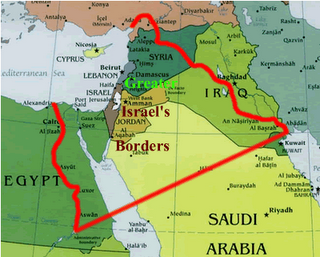
When the Almighty
restores the kingdom to Israel, the nation will be swept clean of debt, clear of
banks, and paper money will go into the fire. There will be no
income tax and no property tax. The country will not be run by politicians
elected by the money of monopolistic corporations who write the very laws the
politicians pass. Israel will become a nation of prosperous
farmers and productive small industry, with loads of free time left over for
religious duties to God and even more time for actually living.
Those responsible for the law will not be subject to investigations by powerful
enemies on the left.
The Almighty promised
that he would bless Israel more than their forefathers. It will happen,
and following these laws is the only way that it will happen. And in the
age to come, the nations will be taught proper economic laws, and those that
follow them will become prosperous beyond any dreams of this age.
A Comparison of Conservative Misunderstanding
of Economic Principles
We have a capitalist
economic system in the United States, or we had one, but should we pretend that
the system we have had for the last 100, 70, or 30 years is even close to
Biblical? Let us examine the value system of 'conservative economics' and
see what is wrong with it and what is lacking in it.
First there is what is
called the "work ethic". The problem here is that Christians do not think
they are observing the work ethic unless they are working all them time.
As a consequence, the have no time for the weekly Sabbath.
Biblical work requires a the weekly time out from competition. If
one works more than six days, then one is not only not getting rest, and a lower
quality of life. One is also unfairly and unethically competing with
his neighbor, and lowers his quality of life when he should be resting and
worshiping God. And economic system without the Sabbath is an
incomplete economic system. The Sabbath is necessary to temper work, and
synchronize the work lives of people participating in the economy.
It should be recognized that in the United States, the typical work week ends on
Friday. This is good, and is due to the influence of the Sabbath.
The economy has therefore benefits from this somewhat. In other
countries, this is not so, and the people suffer. The
Japanese have an excellent work ethic, but they work so much that they have
little time for rest. The Chinese work themselves to slave labor,
and manage to out compete those who live to take a rest.
Also, just
because the majority of people are off on Friday in America, and do not work on Sabbath at a
regular job does not mean the Sabbath is understood at all, or that it is
properly used. This is were the work ethic without the Sabbath leads
to too much work. After the sixth day, Christians with the "work ethic" do
not really relax, but they engage in some other type of work or competition for
a living. Even those who try to slow down on Sunday go shopping in the
afternoon.
Second there is the
concept of "private property". Do we have any private property in
America? Private property ceased to exist in the United States
around the 1880 when the government figured out how to impose the property tax.
The churches knew better and exempted themselves. That's why church
property is not taxed.
You can always identify property you don't own. If you have to pay
someone else to use it, then it is not yours. The payments are
called taxes or rents. After someone buys a piece of property,
we still maintain the charade of private ownership by referring to persons who
"buy" property as the owner. Actually, they are tenants.
There is still private
property of another type in America. If you own things like tools or
household goods, then you own them privately. You pay no tax or rent on
them. So there is still some private property. However, it may
not remain that way. There are actually states and jurisdictions
that charge a tax or rent on these things also. And in some places
there is even something called a poll tax. That means a tax on your
head. Apparently those paying a poll tax don't even own themselves.
Direct taxation always falls unequally on the poor. The rich know how to
exempt themselves.
What else does not
belong to you. If you pay a direct tax on your labor or work, then it is
called the income tax. Again, you can be only taxed on what you are
considered not to own. So we must conclude that those who pay such
taxes don't own their own labor or work. A biblical tax can only be
for a service you receive.
So we can all sit back
and relax. We can call it democratic free market capitalism. But we
are pretending. We can even pretend that the way things are run in
America is more biblical than socialism or communism. Perhaps a wee
bit. But we must stop thinking that it is even remotely close to the
biblical model of economics. Until we do so, we will have no idea how it
needs to be changed to make it biblical. Biblical private
property is really private. The only person who has any right to
'tax' is God, since he owns everything. But then even God does not
tax the actual property, but only what food is grown on the property. This
is called a tithe. Part of the reason our economy is so far away
from the biblical model, and the reason that Christians don't remember the
biblical model, is that our forefathers let biblical principles fall down like
the proverbial frog being slowly boiled in the frying pan.
What about "free
market competition". If one takes a look at that law code
called the "Federal Register" or OSHA rules, or DNR rules, or any of the zillion
and one "regulations" placed on ordinary people doing ordinary business, you
will realize what "free market" really means, and who is allowed to compete and
who is not allowed to compete. So again, we shouldn't pretend that America
is following the biblical model of free market economics. If you are
a farmer in Peru and bring your produce to the open air market, then that's
easy. Try it in America in any major city, and you will see what
kind of regulatory headache, tax and fee schedule, etc. that you will have to
navigate. Do you want to sell "organic produce". It may
be organic, but you can't sell it without being certified!
Supposedly all these
laws are for health and safety, or to compel market participants to be honest.
That's only 1% true. They are 99% chains on the free market.
As for the 1% of liars, cheats, and polluters of the environment, there is a
biblical way to deal with it that does not require hamstringing business with
regulation. Liars, cheats, and polluters under a biblical system are
simply taken to court and sued when the commit a crime. If this were done
justly, then the rest of the market would regulate itself just fine, and we
could all reap the economic benefits. And of course crime has to be
limited to what the bible says is wrong: lying, cheating, stealing, ruining you
neighbors property, etc. So as long as you cannot waltz down to the
town square and set up your vegetable stand to sell your garden produce without
cross-eyed looks from the authorities, lets not say we have a free market
economy. And lets not pretend that it is even close to Christian.
The closest thing to free market we have is called the, "Garage Sale" and
technically you have comply with regulations to do even that.
The Redefinition of Economics

So we really do not have private property in America, real money, or a
free
market, but we are told that America believes in "private" property, "money" and a
real "free" market. We are told that business' compete on their
merits, and that the deck is not stacked against them like in other countries.
If you ever read George Orwell's novel 1984, then you will be familiar with
"newspeak". Newspeak is a unique language invented by fascistic
governments that turns lies into truth and truth into lies. Newspeak
is not the vision of some futuristic totalitarian society. Newspeak is
widely spoken and understood right here in the United States of America.
Take any country in the world in any system of government 150 years ago, and you
will find that it was economically freer then. But now all the countries of the world are
on fiat paper currency. Is it valid then to compare America to other
countries of the present and then conclude that America is better off, or
"freer"?
That's like comparing America to a shrinking ruler. America will
always look bigger and better if the ruler keeps shrinking. We
should use a fixed standard, not a changing standard. To say America
has a better economy or principles of economics is like saying a sneak thief has
higher standards than a contract killer. When we pass laws
that prohibit business from selling produce in the town square, and then call it
the free market because we can somehow say that our rules are freer than the
country next door, we have entered the surrealistic world of relativistic
newspeak.
Normally we measure economic value by a ruler called 'money'. But if
the ruler shrinks 30% every 10 years, then is the measure valid over time?
Certainly not. Just because the newspeak dictionary says that paper
is money we believe it is money. What is actually happening is exactly the kind of theft
that the kings of old committed. Gold and silver were used for money
then. And it was really money then. However, they did not have
a newspeak dictionary to deceive the people into using paper. What a king
would do is acquire some gold coins. Then
they melted it down and mixed it with lead or some other metal to make more gold
coins than they acquired. Then they went out and spent them as if
they were worth a whole gold coin each.
Now the market figures out that the gold coins are worth less, so they raise
prices, but not before the king has gotten away with a little bit of everyone's
property. Shortly thereafter, some of the poor people who were just
able to pay their bills before the king's theft are now unable to pay their
bills due to the higher prices. They are forced to borrow.
Guess who has extra gold to lend? That's, right the "king"!
They borrow from the king, who charges interest on the loan.
Then after a while these poor people find that they cannot repay the
loan.
Now why did I put the words, borrow, lend, loan, and
repay in italics? Because of the king's theft, and because it is
not called theft and prosecuted as theft, the king's lawyers are able to cover
it up. The truth is that the king did not merely borrow from the
people with his coin scam. He stole from the people what was their
property. So in order to rectify the moral perceptions we must
introduce some new terms which really show what is going on. We must
translate the deceptive newspeak back into reality. Your an
American? Good. You already know "Newspeak". Excellent! What
we now require is the Gregg Reverse Newspeak Dictionary:
Borrowing = recovering what was stolen
Borrow = to recover what was stolen
Lending = returning stolen goods
Lend = to return stolen goods
Loan = the amount of stolen money returned
repay = to return what the thief stole to the thief
interest = what the thief charges you for letting you use the goods he stole
Now of course we expect the king to understate the amount he has stolen from the
people. When discovered, he might confess that he is stealing
3% per year. But he does nothing to rectify the injustice. So
how much is he really stealing? Who knows, but he might try to steal a lot
more by this scheme if he finds that he cannot collect enough taxes to pay the
bills for his rich living. The United States Government says it is
stealing 3% per year in the official inflation numbers, but it is probably
stealing more since it does not report the theft rate truthfully.
The scripture says, "The wicked borroweth, and payeth not again: but the
righteous sheweth mercy, and giveth" (KJV Psalm 37:21). We must
understand these words in their just and correct use. The king's
lawyers cover up his theft by shifting the use of these terms the poor who are
merely recovering what was stolen by telling them that they are borrowing from
the king. Under such a scheme the poor have the perfect right
to recover what was stolen. They have the perfect right to 'borrow'
(according to the unjust king) and then 'default' (according to the
unjust king) on the 'debt' (according to the unjust king). So
let us define some more terms:
default = refusing to play the game by the thief's rules and keeping your
recovered property without trying to defend yourself using the thief's rules.
bankruptcy = keeping a little bit of what you recovered using the thief's rules.
collector = the henchmen of the thief.
negotiation = pleading with the thief to return only some of your recovered
property to him.
debtor = (1) the king's bad name for one who seeks to liberate their own
property, (2) a person justly getting even with the system.
So, contrary to what most conservative Christian counselors tell us, the
'debtor' (see proper definition above) has the moral high ground.
The 'debtor' has every right to recover his own property, and not only that, but
he or she has the right to recover an amount of property equal to punitive
damages also. To understand the rate of punitive damages, we turn to this
parable that the Prophet Nathan told King David.
And the LORD sent Nathan unto David. And he came unto him, and
said unto him, There were two men in one city; the one rich, and the other poor.
2 The rich man had exceeding many flocks and herds: 3 But the poor man had
nothing, save one little ewe lamb, which he had bought and nourished up: and it
grew up together with him, and with his children; it did eat of his own meat,
and drank of his own cup, and lay in his bosom, and was unto him as a daughter.
4 And there came a traveller unto the rich man, and he spared to take of his own
flock and of his own herd, to dress for the wayfaring man that was come unto
him; but took the poor man's lamb, and dressed it for the man that was come to
him. 5 And David's anger was greatly kindled against the man; and he said to
Nathan, As the LORD liveth, the man that hath done this thing shall surely die:
6 And he shall restore the lamb fourfold, because he did this thing, and
because he had no pity (KJV 2 Samuel 12:1).
The people have the right to recover up to four times what the banksters stole
in the first place. Let us now try to quantify how much the
banksters stole. If the average house hold income was 40,000 for the
last 30 years, then the actual amount stolen is: $1200/year. For 30
years: $36,000. Adding punitive damages: $144,000. And that is
just at 3% inflation. The reality is more like 12% inflation at the
present. At 12% inflation for the past three years, one has the
right to recover $57,600.
So we see that total debt forgiveness is the least remedy that the people
deserve. Bankers like to call this attitude
that people should not pay their loans, 'moral hazard'. This is the
term they use to describe the increasing tendency of people not to pay their
debts when the bank gets extremely greedy in its lending.
That's what you get for letting a thief define the terms of the theft.
The sad thing is that Christians have gone along with this. If
Churches and Christians everywhere would read their bibles and proclaim the
illegitimacy of the thieves, and morally support the recovery of the stolen
property then we are on the road to truth and prosperity.
Actually, the biblical concept of debt forgiveness does not even apply in the
case of recovering property from a thief. Yet, as long as the
thief calls it a debt, this biblical remedy is an option. For whatever a
criminal would do to his neighbor must be done to him.
Anatomy of the Thief
We must dissect the thief to make sure we know what all his innards look like.
We don't want to misidentify some legitimate lenders with the thief.
If you borrowed from your relatives or neighbor, then you are obligated to pay
them back for seven years after the initial loan. That's because
they actually worked for the substance they lent you, and they did not take it
from you in the first place. If you owe rent or utilities, or for
food, or fuel, or for anything obtained from a sole proprietor business, then
you need to do your best to make it right within seven years. If
your debt is measured by a debt currency, then you probably owe them the rate of
inflation also, simply so they get equal value for whatever they lent.
They do not have a right to additional profit called interest. You
do not have to pay them that. Only the real value of the loan when it was
made is due. All the biblical laws on debt apply here.
And none of the new speak translations apply.
Now to dissect the thief we operate on the principle that the thief will be
anyone who actually perpetrates the theft, or any individual corporation or
business that has the spoils of the theft given to them by the thief.
But, first to make a dividing line we must further quantify the extent of the
theft. The theft has been perpetrated on that last three
generations, or for 100 years worth of wealth. The cumulative
inflation rate is 300%. If we average out annual income, we pick the
mid 1970's or 25,000/year. Total: 2,500,000. Times 300%: 7.5
million. Punitive damages: 30 million.
So you can bet that any one corporation or individual that is worth more than 30
million, and who received any borrowed money to grow to that size, is complicit
with the thief. This is actually quite generous since many
participants with the thief are being sheltered by the biblical fourfold penalty
clause. There may be business which grew larger than 7.5 million
without the use of stolen property. These are not guilty.
Who definitely is included? All banks. All large
corporations. All Credit Card Companies. GM, Ford,
Capital One, Bank of America, Chase Bank, Citi, etc. If they lend
money or borrow large amounts, then they are complicit with the thief.
The poor are under no obligation to pay them back. In fact, they are
entitled to punitive damages!
Who are the Poor? Who has been defrauded?
I include this section
to make it clear that it is not just Americans that have been defrauded by the
banksters, corporations, credit card companies, and other lenders, who have
benefited from the inflationary feeding trough. People in every
country of the world have been enslaved and defrauded of their property by the
banks in New York, Tokyo, and London, and by every government that has gone off
of sound money and engaged in a policy of devaluation and inflation.
That includes Russia and China. So it is no wonder why the
world is experiencing an economic apocalypse.
Economics Poorly Understood
Christians do not understand economics because they do not understand what the
Scripture teaches about it. One has to look no further than
Gary North, a famous
Christian economics teacher. While North understands the
bible's teaching on sound money and perhaps private property, he does not
understand the bible's teaching on debt, slavery, borrowing, or the year of
Jubilee. The year of Jubilee he rejects outright, saying that,
"Jesus Annulled the Jubilee Laws". Then he claims that one
could be sold into slavery if he or she could not pay a debt.
However, this is not so either, because the Scripture specifies that one could
be sold only to pay restitution for a theft or other willful destruction of a
neighbor's property (Exodus 22:1). North limits the debt release in
the seventh year to just a charitable loan made to a poor Christian. This
is not what the bible says. All loans were forgiven, not just charitable
loans. North's limitation will not solve any debt
problem. Most loans are not charitable loans! North also
limits the usury law to interest on charitable loans. He allows
interest on so called commercial loans. But again, the
Scripture makes no such distinction. Any interest whatsoever is
banned for any fellow Israelite. North's interpretation of economics
fits the culture of reformed Calvinism where the Calvinists are in control of
the city state. But this version of capitalism is not Biblical.
It makes you gag. It makes me want to use another term for biblical
economics. Capitalism is so tainted with usury, monopolies, and
debt, that it is useless as a term.
Once again, if
commercial loans are not forgiven in the seventh year, and if the Jubilee law is
abolished, then what is to keep debt from compounding, and monopolies from
building by adding house to house until we need another depression to clean out
the debt and break down the monopolies? If Gary North cannot define
Biblical economics correctly, then what Christian can? Very few.
Most of them speak ignorance when seeking support from the bible, or they chose
to ignore it altogether.